
How to elope, step by step
An elopement is not a big wedding plan with the guest list removed. It is a ceremony for a few people, in a place you chose, and the legal steps are still required. The PDF below is that shorter list, dated to your day.
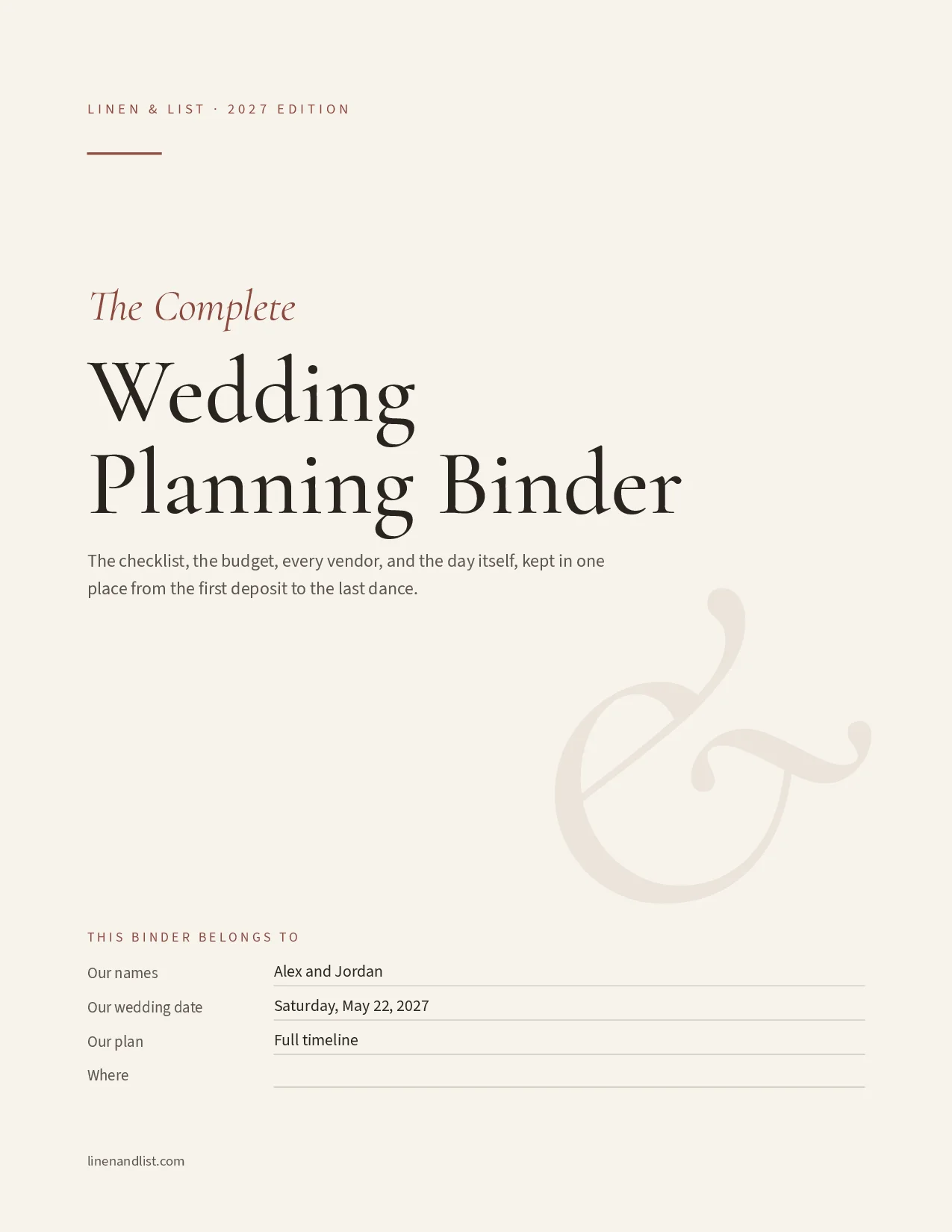
Want the whole plan in one binder? This checklist plus vendor sheets, a seating plan, ceremony and photo pages, and a day-of timeline. Includes the budget spreadsheet.
See the binder, $9.99Print preview. Checkboxes are for the PDF, not this page.
Preview
Enter your wedding date. The dated list appears here.
It prints at home, with a box to tick for each task and a notes page at the back.
Start with the county, then the place
Call the clerk where the ceremony will happen. Ask what ID you need, the fee, whether there is a waiting period, how long the license stays valid, how many witnesses are required, and whether a friend can officiate. If you are leaving your home state to marry, use the rules of the place where you marry, not the rules where you live.
Then pick the place and find out if it wants a permit. Trails, beaches, and city overlooks often do. Some ban alcohol, amplified sound, or chairs. A backyard does not need a permit, but it still needs a real rain plan, such as a covered porch. Send the photographer the backup location in the same message as the map location.
Who attends
Two people and the legally required witnesses is a complete elopement. So is a handful of friends. So is a parent if you want a parent there. Write the list down before you share the date in a group chat, because elopement guest lists often grow without a plan. If your state requires witnesses, plan how they will get there, especially if the trail is far from any rideshare service.
Plan how you will announce the marriage. The task on the checklist is not “post a photo.” It is “choose when the people who love you will hear it from you.”
Clothes, words, and pictures
Wear something you can walk in. Plan for mud, wind, stairs, and sitting on a rock, not a ballroom. Bring a layer you can take off for the twenty minutes of photos.
One to three hours with a photographer is a normal elopement. Ask if they are willing to hike the actual trail and what they do if the road is closed. Agree on a meeting point. If you are not hiring anyone, ask a witness to take ten careful photos of the important moments, such as the kiss, instead of hundreds of random ones.
Write what you will say, and read it out loud once. If a friend is officiating, confirm the county’s paperwork before you print their script. Where a friend cannot legally officiate, hire someone who can, or use the courthouse and say your own words outside afterward.
After the ceremony
Reserve a table at a restaurant. A good elopement day usually ends with a meal, even if it is only the two of you. Cake at the kitchen table counts. If you drive home hungry in your wedding clothes, the plan was missing a step.
Flowers are optional. A hand-tied bunch from a shop is enough, and someone has to hold it while you sign. Skip the rest of a traditional vendor list unless you specifically want it. A small wedding is the right page if you are feeding forty people. The full checklist is the right page if this is actually a long engagement with a venue. This page is for the type of wedding that most checklists skip: a real ceremony, a short guest list, and a license that still has to be right.
The elopement task list
4 months before
Open one shared folder for the whole wedding
Keep contracts, receipts, inspiration, and the guest list in one place you can both open. Notes in a phone app and photos on your phone get hard to find after many months.
Call the clerk in the county where you will marry
Ask what ID you need, the fee, whether there is a waiting period, how long the license stays valid, and how many witnesses a ceremony needs. Rules are different in each state and often in each county. Only the clerk can give you the correct answer.
Decide who will be there
Just the two of you, a witness or two, or a few people you love. Tell them this is the wedding itself, and not an early event before a bigger party, unless a bigger party is actually planned.
Pick the place and check whether you need a permit
A trail, a backyard, a rental cabin, a judge's chambers. Public land often needs a permit and sometimes forbids alcohol or chairs. Ask before you buy a dress you cannot sit on a rock in.
3 months before
Book the photographer
Good photographers get booked early, so book one before you plan the look of the day. Ask who takes the photos if they are sick, how many hours you are paying for, and when you get the photos. Bring your questions to the call.
Book the officiant, or confirm the friend who is doing it
Ask what their ceremony usually includes, whether they will do a rehearsal, and what they charge if the day lasts longer than planned. Write down their legal requirements next to the clerk's.
Order the outfit with the longest lead time
A made-to-order dress can take six months before alterations. A suit off the rack can be a month. Start with the outfit that takes longer, and ask what alterations cost before you choose it.
Plan how you will tell people who are not invited
Say it early and plainly, before the invitations go out. A small list is about the size of the day, not about who matters most. It is easier before someone hears it from another person.
Find witnesses if your state requires them
Ask the clerk how many, whether they must be a certain age, and whether they must know you. If the place is remote, plan how they will get there.
Book a photographer for the ceremony and portraits
One to three hours is a normal elopement. If you are hiking, ask whether they are comfortable with the trail and the weather. Agree on a meeting point with a backup if the trailhead is closed.
Choose outfits that work in the actual place
Mud, stairs, wind, and a courthouse metal detector are all real. Try the shoes on the surface you will stand on. Bring a layer you can take off for portraits.
If you are traveling to marry, plan how you will get there
Lodging, the license rules of the place you will marry (they may differ from home), and an extra day in case a flight is delayed. Do not schedule the ceremony for the hour you land.
2 months before
Outline the ceremony with your officiant
Processional, readings, vows, ring exchange, recessional. Decide what you could remove if it is hot and you are standing in the sun. A twenty-minute ceremony and a forty-minute one need different photo plans.
Shop for rings if you do not already have them
Get sized when your hands are at a normal temperature, not after a workout. Ask about resizing later and about a band that will sit next to an engagement ring.
Book the room you will sleep in
The night of the wedding, and the night before if you are not already local. Ask about a late checkout before you need one.
Buy shoes and start wearing them at home
Wear them at home for an hour at a time now, so they do not give you blisters on the day. Ask the tailor whether the hem should be set with these shoes, not with bare feet.
Decide what you will say
An officiant, a friend with the county's permission, or vows you read to each other where that is legal. Write it down. Practice once out loud.
Reserve a meal for after
The best elopements we hear about end with a real meal at a table, not snacks in the car. Book it, even if it is just the two of you. Plan a real celebration.
One month before
Choose readings, how you will say vows, and ceremony music
Decide whether you will write vows, repeat after the officiant, or both. If someone is reading, ask them now and send the text in a normal font they can print.
Ask a practical friend to be the day-of point person
The point person is the one helper vendors and guests go to with questions on the day. Choose someone who is not a parent and, if possible, not in the ceremony. They get the timeline, the vendor phone list, and the tip envelopes.
Draft enough of the ceremony script to time it
Read it aloud. A script that looks like ten minutes on paper is often twenty. Shorten it now, with the officiant, not just before you walk in.
Put every remaining payment on one calendar
Vendor, amount, due date, and how you will pay. Include tips you plan to give in cash. Do this now so you do not log in to twelve vendor websites the week of the wedding.
Visit the venue and see where the event moves if it rains
Ask where the ceremony moves, who decides, and by what time. If there is a tent, ask who checks the weather forecast and what happens to the booking in strong wind.
Write vows if you are writing them
Reading them to each other before the day is your choice. Either way, print two copies. Do not depend on your phone, because it can lock or run out of battery. Keep them short enough to say while nervous.
Send the photographer a short list of people and portraits
Family combinations, written as names, and the portraits you care about. Also list any groupings that would upset someone, so they are avoided. A list of eighty posed photos will not happen. A list of twelve will.
Apply for the marriage license on the first date your county allows
Some licenses are valid for only a short time, and some counties want you there in person. Take the ID the clerk named, both of you if they require it, and the fee. Do not wait until the wedding morning.
Go to the final fitting
Move, sit, and lift your arms. Ask what to do if a button comes off on the day. Take the outfit home only when they tell you it is finished, and hang it where nothing will crush it.
Build the day-of timeline with extra time
On a wedding day, a five-minute task often takes thirty, and thirty minutes can feel like five. Add extra time for getting ready, travel, and family photos. Leave a gap before the ceremony so you are not rushing.
Collect a phone number for every vendor for the wedding day
Not the studio's general inbox. The person who will answer at 8 a.m. Put the list on one page for your point person.
Get simple flowers, or skip them
A hand-tied bunch from a shop the day before is enough. Ask who will hold them while you sign the license.
Choose a real backup place in case of bad weather
A porch, a car, a restaurant side room. Set the time you will decide. Send the photographer the backup in the same message as the map location.
Decide when you will tell everyone else
A call to parents the same day, a photo the next morning, or a letter. Pick it in advance so you do not have to decide on the wedding day.
Wedding week
Pack an emergency kit
Stain pen, fashion tape, pain reliever, bandages, a phone charger, blotting papers, a snack, and a copy of the timeline. Give it to your point person to carry. Wedding outfits often have no pockets.
Confirm arrival times with every vendor in writing
Reply to each vendor with the time, the address, the on-site contact, and the meal plan. Ask them to reply. A confirmation is a reply, not a message you sent.
Prepare final payments and tips
Cash tips in labeled envelopes, and any remaining balances in the form the contract requires. Hand the stack to the point person with a list of who gets what, and when.
Pick up the license if your county does not hand it to you the same day
Read it before you leave the counter. Names should match the IDs. Ask where the officiant must return the completed license, and by when.
Assign who carries the rings and the license
Two different people is safer than one. Do not keep the license in a coat you might leave in a car. Remind both people of their job the day before.
Give your point person a one-page day-of sheet
Timeline, vendor phones, family notes, and where the tips are. They should not have to scroll a group chat. Print it.
Steam the outfits and try the full look once
Sit down in it. Check that you can hug someone. Hang it in a garment bag at the place you are getting ready, and not in a car overnight if possible.
If you are changing a name, make the list of offices
In the US, change your name with the Social Security Administration first, then on your ID, then with banks, payroll, and on travel documents. This paperwork takes weeks, and the order depends on your situation. Start a list. Do not start it during the reception.
Print the vows and the readings
Two copies of the vows, and a copy of every reading. Put them in a folder the officiant has seen. Charge the phone anyway, but do not depend on it.
Hand the marriage license to the officiant
Do it at the rehearsal or the morning of, and confirm how it gets back to the county. If the license is in a bag at the reception, it can easily be left on a chair.
Pack the overnight bag and the chargers
License copies, rings if they are not already assigned, medication, a change of shoes, and a snack for the morning. Put the bag in the car or the room the night before.
Eat a real meal and go to sleep
The schedule can handle a toast that starts late. It cannot handle two people who have not eaten. Keep the night before free, and go to bed early.
Get married
If you asked guests not to use phones during the ceremony, remind them. Sign the license where the officiant shows you. After the ceremony, the rest of the day is food and music. You do not need to stay with every guest the whole time.
Thank the vendors and return what you rented
A short note and the final payment you promised. Return rentals on the agreed morning so you are not billed for an extra day. Tip anyone who helped fix a problem and did not already get a tip envelope.
Questions people ask
What is the difference between an elopement and a courthouse wedding?
An elopement is a small ceremony you design, often outdoors, at home, or away. A courthouse wedding is a civil ceremony in a government building, on the office’s schedule. They overlap when the elopement is the courthouse appointment. Otherwise they need different checklists: permits and weather on one side, appointments and metal detectors on the other.
Do you still need a marriage license to elope?
Yes, if you want the marriage to be legal. The license comes from the county where you marry, which may not be the county where you live. Rules for waiting periods, witnesses, and who may officiate vary. Call that clerk. If you are traveling, do not assume your home state’s rules apply there.
Who should you tell, and when?
Decide before the day. A call to parents the same afternoon, a photo the next morning, or a letter are all reasonable plans. People are most hurt when they hear the news from someone else. If a few people are invited, tell them it is the wedding, not a small event before a bigger party, unless you really are planning a later party.
Want the whole plan in one binder?
The Complete Wedding Planning Binder is this checklist dated to your wedding, plus budget pages, vendor sheets and comparisons, a seating plan, ceremony, music, and photo pages, and a day-of timeline, in one PDF. It comes with the budget spreadsheet.
See the Planning Binder