
How to plan a small wedding
Small usually means the guest list fits around a few tables, or in a restaurant’s back room, or in a yard you have a permit for. The legal steps stay the same. The number of vendors and extras should go down. This version of the checklist keeps the legal steps, the meal, and the guest list, and drops the tasks for large ballroom events.
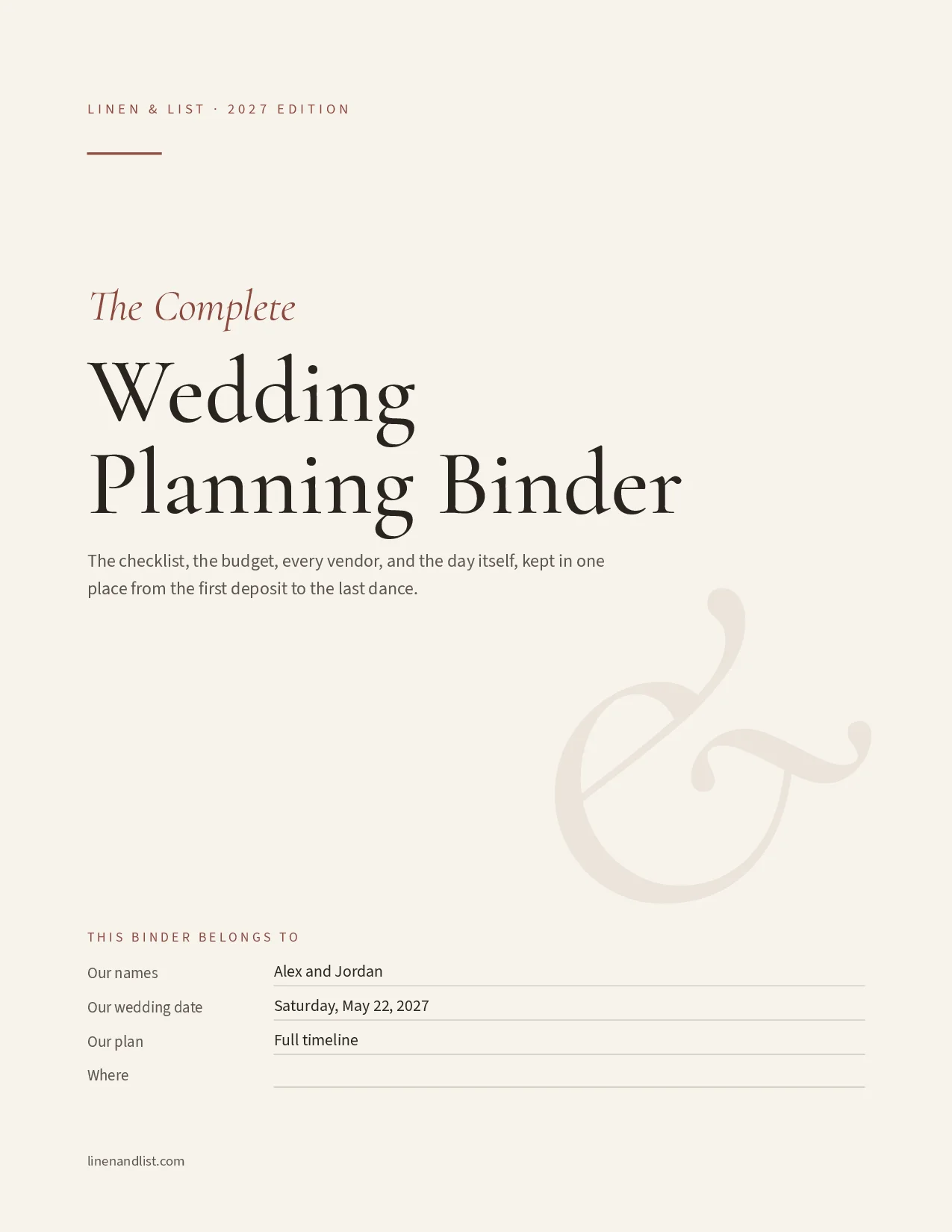
Want the whole plan in one binder? This checklist plus vendor sheets, a seating plan, ceremony and photo pages, and a day-of timeline. Includes the budget spreadsheet.
See the binder, $9.99Print preview. Checkboxes are for the PDF, not this page.
Preview
Enter your wedding date. The dated list appears here.
It prints at home, with a box to tick for each task and a notes page at the back.
Decide the type of day first
Write one sentence: dinner for thirty, ceremony and lunch for fifty, or parents plus siblings in a park. Use that sentence to decide which vendors to contact. If a venue’s smallest buyout is twice your list, it is the wrong room, even if the photos are beautiful. Restaurants with a private table, houses, community halls, and parks with a simple permit are the venues that fit this size.
The same sentence helps with relatives. A small list is a choice about the day. It does not mean you value some relatives more, but people may think so if they hear about it from another relative. Tell the people who are not invited early, in a plain sentence, before invitations exist. The checklist has that task on purpose.
What you still need
- The call to the county clerk. ID, fee, waiting period, expiration, witnesses. Still not the same in every US county.
- A real plan for how people eat, including who deals with the dishes if the meal is at home.
- Photography for the hours you care about, which might be three hours and not fourteen. Put the hours in the contract.
- Outfits that you can sit and hug in, with enough time for alterations.
- One person who is not getting married and is in charge of the timeline, even if that person is a friend and not a hired coordinator.
- RSVPs if you are feeding people. You still need an exact headcount with forty guests.
What you can skip
Favors, a matching wedding party of twelve, ceremony programs, a videographer, a band plus a DJ, uplighting, a hotel room block for a local guest list, and a save-the-date suite. If you want one of those, have it. The problem is adding them only because a checklist for a bigger wedding included them. Make a list of what you are skipping and share it with family members who help.
Flowers can be a florist, a shop bunch, or nothing. If they are a shop bunch, name the person who buys them the day before. If the plan is only “we’ll just grab some” on the wedding morning, the shops may be closed or sold out.
The budget
Per-person food and drink is still the largest part of the budget. A smaller list is the most reliable way to spend less. A $5,000 wedding is possible at this size in many cities. It is not likely if the “small” wedding has slowly grown into a Saturday with eight vendors. The 50/20/30 split is not a rule. If the meal is the main event, most of the money is the meal, and that is fine.
An elopement is smaller still, and usually designed by you in a place that is not a banquet hall. A courthouse wedding is a civil appointment. Both can be the right small wedding. They are different events. If you are planning a year ahead with a full vendor team, use the full checklist instead of this one.
The small-wedding task list
10 months before
Decide what kind of wedding day you want
Write down a guest-count range, how formal you want it to be, and whether this is a dinner, a party, or a ceremony with lunch after. These choices affect the budget more than anything else.
Set a working budget and decide who is paying
Agree on the most you will spend before you visit any venues. Write down what each contributor is actually offering, not what you hope they might offer later.
Pick two or three candidate dates
Check major holidays, big football game days if they matter to your families, and the days the venue is closed. Treat the dates as possible, not final, until you sign a contract.
Open one shared folder for the whole wedding
Keep contracts, receipts, inspiration, and the guest list in one place you can both open. Notes in a phone app and photos on your phone get hard to find after many months.
9 months before
Keep wedding money in a separate savings account
A separate account shows clearly what you have for deposits. Move money into it when a contract says the next payment is due, not when the card statement arrives.
Call the clerk in the county where you will marry
Ask what ID you need, the fee, whether there is a waiting period, how long the license stays valid, and how many witnesses a ceremony needs. Rules are different in each state and often in each county. Only the clerk can give you the correct answer.
Draft the guest list by household
Write names and rough addresses now, and decide who may bring a guest before anyone asks. A guest count without names often leads to going over budget.
Tour venues and pay a deposit to reserve the date
See the room at the same time of day as your wedding. Ask what is included, what time everything must end, and where the event moves if it rains. Get the date in writing before you post it online.
Set up a registry only if you want gifts
Asking for cash, a few physical gifts, or no gifts at all are all fine. If you skip it, decide what you will say when someone asks, so a relative does not guess.
8 months before
Ask whether a friend can officiate
Some states let a friend get legal permission to perform one wedding, and some do not. If you want a friend, ask the clerk what paperwork that person needs and how far ahead they must file it.
Book the photographer
Good photographers get booked early, so book one before you plan the look of the day. Ask who takes the photos if they are sick, how many hours you are paying for, and when you get the photos. Bring your questions to the call.
Book the officiant, or confirm the friend who is doing it
Ask what their ceremony usually includes, whether they will do a rehearsal, and what they charge if the day lasts longer than planned. Write down their legal requirements next to the clerk's.
Choose a start time and check the daylight at that hour
An afternoon ceremony, a ceremony in the hour before sunset, and an evening dinner need different plans. Sunset times change by month. Pick the time before you agree to a photo schedule.
Book catering, or confirm the venue's kitchen
Ask how they charge for children, what a tasting includes, when the final headcount is due, and what time the bar closes. Ask where dietary needs get written down, so the kitchen plans for them.
Decide if you want a planner or a month-of coordinator
A month-of coordinator starts about a month before and runs the schedule on the day, so a parent does not have to. If you skip one, choose an organized friend who is not in the wedding party.
Choose a room that fits the guest count you actually have
A small wedding gets expensive when you rent a ballroom and then try to fill it. Restaurants with a back room, a family table at home, and parks with a permit are often the right size.
Book a few hours of photography, not a fourteen-hour day
Ceremony, a handful of portraits, and part of dinner is a common plan for a small wedding. Ask for the hours in the contract so you are not paying for a reception you are not having.
7 months before
Order the outfit with the longest lead time
A made-to-order dress can take six months before alterations. A suit off the rack can be a month. Start with the outfit that takes longer, and ask what alterations cost before you choose it.
Start a wedding website with the facts
Date, city, hotel, and how you will collect RSVPs. A password on the wedding website is only needed if there is a real reason. Update it when the plan changes so you do not answer the same question forty times.
Write down what you are skipping on purpose
Favors, a DJ, a wedding party of twelve, programs, a videographer. A written list stops relatives from adding things you do not want.
6 months before
Book flowers, or decide you will buy them the day before
Florists are often fully booked on popular Saturdays. If you want grocery or farmers-market flowers, write down who is buying them and where they will be arranged. Do not leave it for 7 a.m. on the day.
Book ceremony music and the reception DJ or band
Ceremony musicians and a DJ do different jobs. Confirm when sound checks happen, whether the venue has a noise curfew, and who announces dinner. Check the contract for overtime charges.
Book hair and makeup, and put a trial on the calendar
A trial shows you how the makeup looks in photos, for example if it looks too orange. Ask whether the artist travels to you, what a Sunday wedding costs, and when the balance is due.
Decide how people will eat
A restaurant that can take the whole party, a drop-off meal, or cooking with help. Write the plan down, including who stays after to deal with dishes if it is at home.
Plan how you will tell people who are not invited
Say it early and plainly, before the invitations go out. A small list is about the size of the day, not about who matters most. It is easier before someone hears it from another person.
5 months before
Book transportation for the people who must arrive together
You, the wedding party, and anyone who should not drive. Confirm the hours in the contract, not a text, and ask what happens if the ceremony lasts longer than planned.
Outline the ceremony with your officiant
Processional, readings, vows, ring exchange, recessional. Decide what you could remove if it is hot and you are standing in the sun. A twenty-minute ceremony and a forty-minute one need different photo plans.
Order wedding-party outfits
Give people a clear instruction: rent this, buy this, or wear something you own in this color. Pay for it if you are requiring a specific purchase they will not wear again.
Make a rough honeymoon plan and check passport dates
Passports should be valid well past the return date. Some countries want six months of validity. Book the time off with work before you book the flight.
Order invitations and the printed items for the day
Invitations, details cards, menus, and place cards. Proof every name. Order a few extras. If the invitations are letterpress or foil, printing takes longer than you expect.
Compare deposits already paid with the working budget
List every contract, what is paid, and what is still due. If you are over, reduce a category now, while vendors can still change the order. Do not wait for the final headcount.
4 months before
Order the cake or another dessert
Ask about delivery, a stand, cutting, and what a smaller cake plus a sheet cake in the kitchen costs. A dessert table still needs a person assigned to set it out.
Shop for rings if you do not already have them
Get sized when your hands are at a normal temperature, not after a workout. Ask about resizing later and about a band that will sit next to an engagement ring.
Plan the rehearsal dinner or a welcome meal
It can be a simple pizza dinner. Book it if you need a restaurant on a Friday. Decide who is invited at the same time you decide where it is, so the guest list does not grow in group messages.
Book the room you will sleep in
The night of the wedding, and the night before if you are not already local. Ask about a late checkout before you need one.
Do a menu tasting and write down allergies you already know
Taste what guests will actually be served, including the vegetarian plate. Start a note of allergies from the families. The form on the RSVP should match that list.
Buy shoes and start wearing them at home
Wear them at home for an hour at a time now, so they do not give you blisters on the day. Ask the tailor whether the hem should be set with these shoes, not with bare feet.
Book the first fitting
Salons often want the first fitting a couple of months after the order arrives, and a final one close to the date. Put both on the calendar when you book the first.
Ask a practical friend to be the day-of point person
The point person is the one helper vendors and guests go to with questions on the day. Choose someone who is not a parent and, if possible, not in the ceremony. They get the timeline, the vendor phone list, and the tip envelopes.
Book the night-before room if you are not local
Getting ready in a room with good light and a bathroom is easier than in a small bedroom with one outlet. Confirm where hair and makeup can set up.
3 months before
Start a must-play and do-not-play list
Ten songs you want, and the ones that will make people leave the dance floor or upset someone. Give it to the DJ or band later. Do not try to plan four hours of music the week before.
Choose readings, how you will say vows, and ceremony music
Decide whether you will write vows, repeat after the officiant, or both. If someone is reading, ask them now and send the text in a normal font they can print.
Go to the first fitting
Bring the shoes and the undergarments you will wear. Take a photo of the back. Ask what still has to happen and when the next appointment is.
Draft enough of the ceremony script to time it
Read it aloud. A script that looks like ten minutes on paper is often twenty. Shorten it now, with the officiant, not just before you walk in.
Put every remaining payment on one calendar
Vendor, amount, due date, and how you will pay. Include tips you plan to give in cash. Do this now so you do not log in to twelve vendor websites the week of the wedding.
Confirm vendor meals with the caterer
Photographers, coordinators, and musicians need a full meal, not leftovers. Ask the caterer what they charge and tell vendors what time they will eat.
Visit the venue and see where the event moves if it rains
Ask where the ceremony moves, who decides, and by what time. If there is a tent, ask who checks the weather forecast and what happens to the booking in strong wind.
Check that guests who cannot use stairs can get around
Step-free route from parking to the ceremony and the bathroom, a seat that does not require stairs, and a place to sit during a long photo session. Fix problems now, while you can still change the layout.
Do the final hair and makeup trial
Wear a shirt in a color close to the outfit. Look at the photos in daylight and in the room where you will get ready. Change what you do not like now.
2 months before
Mail the invitations
For a US wedding, eight to ten weeks before the date is usual. Send them later if everyone is local, and earlier if many guests are coming from other countries. Include the RSVP date on the card.
Write vows if you are writing them
Reading them to each other before the day is your choice. Either way, print two copies. Do not depend on your phone, because it can lock or run out of battery. Keep them short enough to say while nervous.
Send the photographer a short list of people and portraits
Family combinations, written as names, and the portraits you care about. Also list any groupings that would upset someone, so they are avoided. A list of eighty posed photos will not happen. A list of twelve will.
One month before
Buy gifts for your wedding party
A useful item or a letter is better than a matching robe they will not wear. Buy for parents too, if that is your family's custom. Do it before the wedding week, when there is no time to shop or wrap.
Apply for the marriage license on the first date your county allows
Some licenses are valid for only a short time, and some counties want you there in person. Take the ID the clerk named, both of you if they require it, and the fee. Do not wait until the wedding morning.
Track RSVPs and send one reminder
Note meal choices as they arrive. One kind reminder a few days after your deadline is enough. Then plan for the people who still have not answered.
Give the caterer a working headcount
This is not always the final number. Send what you know, plus the allergies, and ask the date the number becomes final. Update them once, in writing, on that date.
Go to the final fitting
Move, sit, and lift your arms. Ask what to do if a button comes off on the day. Take the outfit home only when they tell you it is finished, and hang it where nothing will crush it.
Build the day-of timeline with extra time
On a wedding day, a five-minute task often takes thirty, and thirty minutes can feel like five. Add extra time for getting ready, travel, and family photos. Leave a gap before the ceremony so you are not rushing.
Write the processional and the recessional order
Names, not 'the wedding party.' Who walks with whom, and who sits in the front row. If family relationships are complicated, decide the seating now and tell the ushers.
Confirm honeymoon reservations and time off
Flights, hotels, pet care, the mail. Tell your employers the dates in writing if you have not already. Pack a scan of the license if you are changing a name on the trip. Rules for that vary. Ask before you rely on it.
Collect a phone number for every vendor for the wedding day
Not the studio's general inbox. The person who will answer at 8 a.m. Put the list on one page for your point person.
Wedding week
Send the final headcount and dietary list
Use the caterer's deadline for the final number, which is often one to two weeks before. After you send it, do not invite anyone else. If a relative asks late, explain that the number is final. Do not add a guest without telling the caterer.
Make the seating plan
Households sit together unless they have asked not to. Seat older guests where they can hear and leave easily. Leave a few unlabeled seats if your caterer planned for extra guests. Share it with the venue in the format they asked for.
Do a final walk-through with the timeline in your hand
Where you enter, where you sign the license, where dinner is, where the band loads in, and what time you must be out. Introduce your point person if they can come.
Pack an emergency kit
Stain pen, fashion tape, pain reliever, bandages, a phone charger, blotting papers, a snack, and a copy of the timeline. Give it to your point person to carry. Wedding outfits often have no pockets.
Confirm arrival times with every vendor in writing
Reply to each vendor with the time, the address, the on-site contact, and the meal plan. Ask them to reply. A confirmation is a reply, not a message you sent.
Prepare final payments and tips
Cash tips in labeled envelopes, and any remaining balances in the form the contract requires. Hand the stack to the point person with a list of who gets what, and when.
Pick up the license if your county does not hand it to you the same day
Read it before you leave the counter. Names should match the IDs. Ask where the officiant must return the completed license, and by when.
Assign who carries the rings and the license
Two different people is safer than one. Do not keep the license in a coat you might leave in a car. Remind both people of their job the day before.
Give your point person a one-page day-of sheet
Timeline, vendor phones, family notes, and where the tips are. They should not have to scroll a group chat. Print it.
Send the final timeline to every vendor
One PDF. Ceremony time, photo time, dinner, last dance, and the time everything must end. If a vendor needs something different, fix it this week.
Steam the outfits and try the full look once
Sit down in it. Check that you can hug someone. Hang it in a garment bag at the place you are getting ready, and not in a car overnight if possible.
Confirm the pet sitter and who will water the plants
Write feeding notes and name a backup person who has a key. The morning of the wedding is a bad time to learn the usual sitter is also invited.
If you are changing a name, make the list of offices
In the US, change your name with the Social Security Administration first, then on your ID, then with banks, payroll, and on travel documents. This paperwork takes weeks, and the order depends on your situation. Start a list. Do not start it during the reception.
Print the vows and the readings
Two copies of the vows, and a copy of every reading. Put them in a folder the officiant has seen. Charge the phone anyway, but do not depend on it.
Rehearse the ceremony
Walk the processional, the signing, and the recessional. It can take twenty minutes. Tell people what time dinner is at the same time, so they stay.
Hand the marriage license to the officiant
Do it at the rehearsal or the morning of, and confirm how it gets back to the county. If the license is in a bag at the reception, it can easily be left on a chair.
Pack the overnight bag and the chargers
License copies, rings if they are not already assigned, medication, a change of shoes, and a snack for the morning. Put the bag in the car or the room the night before.
Confirm pickup times the day before
Text the driver the address and the phone of the point person. If guests are using a shuttle, the pickup time should be on the website and in one text.
Eat a real meal and go to sleep
The schedule can handle a toast that starts late. It cannot handle two people who have not eaten. Keep the night before free, and go to bed early.
Get married
If you asked guests not to use phones during the ceremony, remind them. Sign the license where the officiant shows you. After the ceremony, the rest of the day is food and music. You do not need to stay with every guest the whole time.
Thank the vendors and return what you rented
A short note and the final payment you promised. Return rentals on the agreed morning so you are not billed for an extra day. Tip anyone who helped fix a problem and did not already get a tip envelope.
Questions people ask
How many guests is a small wedding?
There is no official number. In practice it is often under about 50 people, or simply a single dinner rather than a ceremony plus a separate party. The number matters less than the type of event. If you still need a ballroom, a band, and a hotel block, it is not a small wedding yet, whatever you call it.
What can you skip at a small wedding?
Often: a large wedding party, programs, favors, a videographer, a DJ, uplighting, and save-the-dates for a local guest list. You do not skip the marriage license, a plan for the meal, a person who knows the timeline, or a decision about who is not invited.
Is a small wedding cheaper?
It is cheaper when the guest count and the vendor list both shrink. It is not cheaper if you rent a room built for 150 and then seat 40. Food is usually priced per person, so the headcount sets most of the budget.
Want the whole plan in one binder?
The Complete Wedding Planning Binder is this checklist dated to your wedding, plus budget pages, vendor sheets and comparisons, a seating plan, ceremony, music, and photo pages, and a day-of timeline, in one PDF. It comes with the budget spreadsheet.
See the Planning Binder